
 0086-13925528791
Leave Your Message
-
CONTACT XXCART
-
 CONTACT XXCART
-
 CONTACT XXCART
Top-selected spindle-related parts and accessories engineered for heavy-duty industrial golf cart applications — keeping your factory fleet running at peak performance.


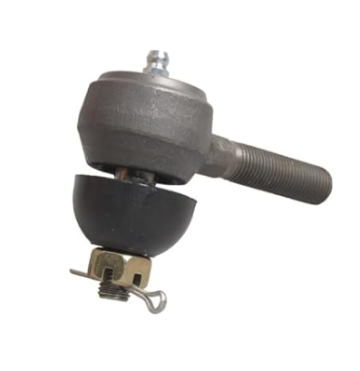

As manufacturing and logistics hubs grow in scale, the internal transportation systems that support them must evolve accordingly. Golf cart wheel spindles — the critical rotating axle component connecting the wheel hub to the suspension — have become a focal point of industrial fleet engineering.
In large factory complexes spanning tens of thousands of square meters — such as automotive assembly plants, semiconductor fabrication campuses, aerospace manufacturing hubs, and distribution mega-centers — internal logistics demand reliable, low-maintenance transportation platforms. Golf cart wheel spindles bear the full brunt of continuous load cycles, abrasive floor surfaces, tight turning radii, and heavy cargo payloads. A spindle failure does not merely halt a single vehicle; it disrupts entire material-flow chains, potentially stalling production lines worth millions per hour.
According to industry analysts, the global fleet of industrial-grade electric utility vehicles — of which golf-cart-platform logistics carts represent a significant segment — exceeded 2.4 million active units in large-scale facilities by 2024, with a CAGR exceeding 11% projected through 2030. Facilities in electronics manufacturing (such as those in China's Pearl River Delta, South Korea's semiconductor zones, and Taiwan's science parks) have adopted fleets of 50 to over 500 carts per complex. The wheel spindle is the most-replaced wear component within these fleets, accounting for up to 38% of all drivetrain-related maintenance expenditure.
The commercialization of golf cart wheel spindles specifically engineered for large industrial complexes has accelerated rapidly since 2018, driven by the explosive growth of gigafactories, smart manufacturing parks, and e-commerce fulfillment mega-centers.
The rise of gigafactories — battery plants, EV assembly campuses, and advanced electronics facilities — has created unprecedented demand for heavy-duty spindle components. These facilities operate carts 20–22 hours per day across hardened concrete and epoxy-coated surfaces. Standard recreational spindles fail within weeks; purpose-engineered industrial spindles utilizing forged 4140 chromoly steel or billet aluminum alloy with sealed precision bearings are now the baseline expectation for procurement teams.
Large factory operators face a strategic choice between OEM-specified spindle assemblies from brands such as Club Car, EZGO, and Yamaha versus aftermarket replacements offering enhanced specifications at reduced cost. The aftermarket segment now commands over 62% of the industrial replacement spindle market, driven by lead-time advantages, custom geometry options, and better compatibility with modified suspension configurations common in factory utility conversions.
Multinational manufacturers are increasingly standardizing their cart maintenance programs globally, issuing single-SKU spindle specifications valid across facilities in China, Germany, Mexico, and the United States. This trend rewards suppliers capable of providing CE-certified, ISO 9001-compliant components with consistent dimensional tolerances, full material traceability, and globally distributed inventory positioning for just-in-time delivery.
The operational requirements for wheel spindles vary dramatically depending on the factory complex type, floor topology, payload demands, and shift intensity. Below is a sector-by-sector breakdown of how industrial wheel spindle performance directly impacts operations.
In facilities such as major OEM assembly lines covering 400,000+ sq ft, golf carts ferry components, tools, and personnel between assembly bays, quality inspection stations, and parts warehouses. Spindles must withstand load cycles exceeding 800 kg gross vehicle weight, frequent 0–15 km/h acceleration cycles, and oil-contaminated floor conditions. Corrosion-resistant coatings and labyrinth-seal bearing races are critical specifications in these environments.
Amazon, JD Logistics, and their global peers operate fulfillment centers exceeding 1 million sq ft where golf cart platforms serve as inter-aisle transport for quality auditors, maintenance crews, and supervisor patrols. High -cycle spindle fatigue is a primary failure mode here, with some facilities logging spindle replacements every 6–9 months. Sealed double-row angular contact bearings with enhanced radial load ratings are the preferred specification.
Next-generation battery gigafactories — including those producing lithium iron phosphate and solid-state cells — maintain ultra-clean room corridors alongside heavy logistics zones. Golf cart spindles in these environments must be non-magnetic, spark-resistant, and compliant with ESD (electrostatic discharge) safety protocols. Titanium-coated spindle assemblies and conductive-bearing configurations are emerging as standard requirements in this rapidly growing sector.
Hangar complexes and aerospace component factories use golf cart platforms for towing tool carts, ground support equipment, and personnel transport across massive floor areas. The spindle assemblies in these applications must pass MIL-SPEC vibration and shock testing equivalents, function across temperature extremes from -10°C to +55°C, and integrate with precision steering geometries required for navigating tight tooling corridors and aircraft proximity zones.
Large pharmaceutical manufacturing campuses and semiconductor fabrication plants require golf cart spindle assemblies that produce zero particulate contamination. Electropolished stainless-steel spindles with fully enclosed bearing housings — meeting ISO Class 5–7 cleanroom compatibility standards — are critical for these facilities. The growing global pharmaceutical sector represents one of the fastest-emerging verticals for cleanroom-grade spindle procurement.
Container port facilities, steel mills, and chemical plant campuses deploy reinforced golf cart platforms for supervisor patrols, safety inspections, and light tool transport across extreme terrain — including grated floors, dock plates, and outdoor paved areas. In these settings, heavy-duty forged spindles with oversized knuckle geometry and high-offset wheel compatibility are preferred, paired with torsion-bar or coil-over suspension modifications to protect bearing preload under rough terrain inputs.
Emerging industrial park developments in Southeast Asia, Africa, and Latin America are deploying golf cart logistics fleets within agro-industrial complexes, food processing plants, and rural manufacturing zones. These environments demand spindle systems with enhanced moisture-sealing, resistance to fertilizer and chemical splash, and cost-effective serviceability in regions where certified technicians may not be immediately available — driving demand for tool-free spindle swap designs.
The industrial wheel spindle segment is undergoing rapid technological evolution, driven by digitization, sustainability mandates, and the acceleration of autonomous vehicle integration within factory environments.
As AGV (Automated Guided Vehicle) and semi-autonomous cart platforms enter factory fleets, spindle assemblies must incorporate encoder-ready hub interfaces, absolute zero-play bearing preloads, and integrated ABS sensor mounting points to support precision odometry and real-time steering feedback for navigation systems.
Smart spindle assemblies embedded with vibration micro-sensors, temperature monitoring nodes, and wireless data transmission modules allow factory fleet managers to receive real-time bearing wear alerts via cloud-connected maintenance dashboards — reducing unplanned downtime by up to 67% in early-adopter pilot programs.
Additive manufacturing (3D metal printing) is enabling rapid prototyping of custom spindle geometries for non-standard cart conversions. Simultaneously, high-entropy alloy (HEA) spindle forgings and ceramic-hybrid bearing races are entering production qualification, promising 3–5× service life improvements over conventional steel assemblies.
Leading industrial operators are adopting spindle remanufacturing programs — returning worn assemblies for precision re-grinding, re-bearing, and surface treatment — achieving up to 85% material recovery. This reduces fleet maintenance costs by 40–55% versus new-part procurement while supporting corporate sustainability reporting metrics.
The shift from lead-acid to lithium-ion powered factory carts changes the vehicle weight distribution profile significantly — reducing front axle spindle loads while increasing rear spindle demands due to battery mass positioning. Spindle suppliers are re-engineering geometry and preload specifications to align with lithium platform dynamics.
Post-pandemic procurement strategies have driven large factory operators to dual-source spindle supplies across regional suppliers — reducing single-source dependency risk. Suppliers with manufacturing presence across Asia, Europe, and the Americas are winning long-term fleet maintenance contracts from multinational operators seeking supply chain resilience.

XXCART is a large and powerful manufacturer of electric golf carts which has obtained CE certification. We mainly make high-end customized golf carts, integrating the advantages of EZ-GO, CLUB CAR, and YAMAHA. Meanwhile, adopting advanced technology, we have researched and developed our own car series designed in accordance with technical standards of imported electric cars.
For large factory complexes specifically, XXCART's wheel spindle and drivetrain solutions are engineered for continuous industrial duty — with rigorous QC protocols, full material traceability, and globally compliant certifications that meet the procurement requirements of Tier-1 manufacturers, logistics operators, and industrial real estate developers worldwide.
Cover parts are made out of special PP automobile engineering material, featured with fashion, beauty, and great durability. These carts are equipped with a unique and individual operation system, agile and smooth steering system, and independent suspension system — fully configurable to your factory complex requirements.
Spindle assemblies machined to custom offset, kingpin angle, and caster specifications matching your factory cart platform and floor topology requirements. Custom anodizing, powder coating, and Cerakote finishes available.
Dedicated application engineers provide FEA analysis, load simulation reports, and fitment verification for non-standard installations — ensuring optimal spindle performance before a single unit ships to your facility.
White-label and private-label packaging for enterprise fleet operators. Engrave your facility's asset codes and QR-traceable part IDs directly onto spindle assemblies for streamlined inventory management.
Regional inventory hubs in Asia, Europe, and the Americas ensure lead times under 5 business days for standard spindle SKUs. Blanket purchase orders and VMI (vendor-managed inventory) programs available for large complex operators.
XXCART adheres to the quality bearing responsibility and is committed to providing users with high-quality, safe, and environment-friendly high-performance products. Every spindle assembly is dimensionally verified to ±0.01mm tolerance, ensuring consistent fit and factory-floor reliability across entire fleet deployments.
Adhere to technology to create advantages, and strive to promote industrial progress, supporting enterprise development and realizing product upgrading through innovation. Our spindle assemblies undergo salt-spray corrosion testing, dynamic load fatigue cycling, and thermal shock validation before release — delivering measurable service life advantages in the harshest factory environments.
Adhere to service highlighting value, and strive to meet customers' growing expectations with continuously improved services. From single-unit prototype to 10,000-unit fleet supply, XXCART's customization pipeline is built to scale with your factory complex's growth — accommodating unique suspension geometry, load rating upgrades, and platform-specific interface requirements.

Designed from the ground up for large-scale industrial deployment, this lifted lithium-ion platform integrates XXCART's precision-engineered wheel spindle system with an independent suspension architecture optimized for factory floor dynamics. The lifted stance accommodates dock plate transitions, expansion joint crossings, and ramp access common across manufacturing and logistics campuses.
The spindle geometry on this platform is specifically tuned for the redistributed weight profile of lithium iron phosphate battery packs, delivering neutral steering feel under full payload across shift-long operational cycles exceeding 10+ hours daily.
View Product DetailsA complete range of precision-engineered replacement parts and accessories, selected for large factory complex fleet maintenance programs — ensuring maximum uptime and operational safety across your entire cart fleet.


