
 0086-13925528791
Leave Your Message
-
CONTACT XXCART
-
 CONTACT XXCART
-
 CONTACT XXCART
Precision-engineered parts designed to meet the rigorous demands of large industrial complexes and commercial fleet operations.
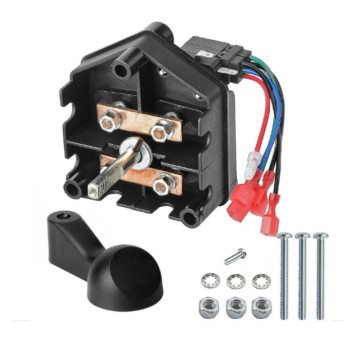 Heavy Duty Forward Reverse Switch Assembly — Factory Fleet Compatible with Club Car Golf Cart
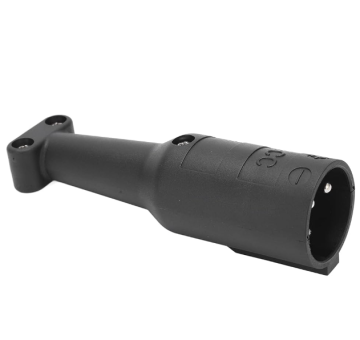 Club Car Golf Cart 48V Charger Plug Receptacle — Industrial Charging Station OE#101828901
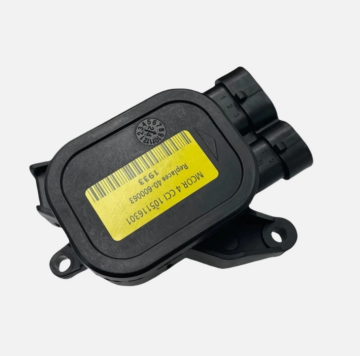 OEM Genuine Club Car MCOR 4 Throttle Potentiometer — Factory Complex Fleet 105116301
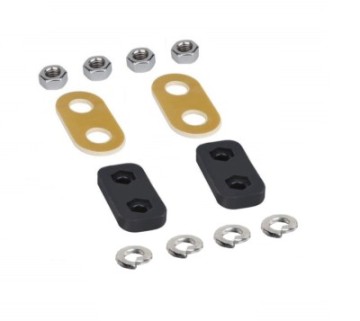 Club Car Electric Golf Cart GE Motor Insulator Hardware Kit — Industrial Grade OEM 1017947
Understanding the industrial backbone of electric fleet mobility — from solenoid function to large-scale deployment strategy.
In today's rapidly evolving industrial landscape, large factory complexes — including automotive manufacturing plants, logistics hubs, aerospace facilities, pharmaceutical campuses, and massive distribution warehouses — rely heavily on internal electric transportation systems. Golf carts and electric utility vehicles have become the standard mode of personnel and light-cargo transport within these expansive environments. At the heart of every electric golf cart's drive system lies a critical yet often overlooked component: the golf cart solenoid.
A solenoid is an electromechanical switch that controls the flow of high-amperage current from the battery pack to the drive motor. When the key is turned or the accelerator is engaged, the solenoid receives a low-voltage signal and closes its contacts, enabling full power delivery to the motor. In a factory complex where dozens or even hundreds of carts operate simultaneously across multiple shifts, solenoid performance directly impacts operational uptime, worker safety, and total cost of ownership.
In large factory complexes, a single solenoid failure can halt a cart mid-route, disrupting production lines, delaying material delivery, and creating safety hazards in high-traffic internal corridors. Selecting industrial-grade solenoids is not optional — it is a strategic operational decision.
The scale of electric vehicle deployment inside modern factories is staggering. A single large automotive assembly plant may operate 150 to 400 electric golf carts and utility vehicles. Logistics giants such as Amazon and FedEx use electric carts extensively within their fulfillment centers. Semiconductor fabs, food processing facilities, and hospital campuses similarly depend on these vehicles for internal mobility.
Unlike recreational golf courses, factory environments subject these vehicles — and their solenoids — to conditions far beyond original design specifications:
When sourcing golf cart solenoids for large factory complexes, procurement managers and fleet engineers must evaluate several key technical parameters to ensure reliability and longevity:
Industrial applications require solenoids rated for continuous current, not just peak current. A solenoid rated at 200A peak but only 100A continuous will overheat and fail prematurely under factory duty cycles. Look for units with a continuous current rating matching or exceeding the motor's rated draw.
Factory fleets often operate on 48V systems. Ensure the solenoid coil is rated for the system voltage. Mismatched coil voltage leads to either insufficient magnetic force (failure to close contacts) or coil burnout.
In dusty warehouses, food processing plants, or outdoor factory yards, an IP65 or higher sealed solenoid prevents ingress of contaminants that cause contact corrosion and premature failure.
Silver-alloy contacts provide superior conductivity and arc resistance compared to copper contacts, significantly extending service life under high-frequency switching conditions typical in factory environments.
Fleet managers at large industrial facilities report that upgrading to heavy-duty, industrial-spec solenoids reduces unplanned downtime by up to 60% and lowers annual maintenance costs per vehicle by an average of $180–$340 USD.
The industrial electric vehicle market is transforming — and solenoid technology is evolving with it.
The industry is rapidly migrating from 36V to 48V and 72V platforms to support heavier payloads and longer range. This demands solenoids with higher continuous current ratings and improved arc-quenching contact materials to handle increased electrical stress.
Leading factory operators are integrating smart diagnostics into their fleet management systems. Next-generation solenoids with embedded temperature sensors and contact-wear indicators transmit real-time data to fleet management platforms, enabling predictive maintenance before failure occurs.
As ESG (Environmental, Social, Governance) reporting becomes mandatory for large manufacturers, the total lifecycle cost and environmental impact of fleet components — including solenoids — are under scrutiny. Longer-life, recyclable-material solenoids are gaining procurement preference.
Factory automation is driving adoption of AGV (Automated Guided Vehicle) platforms based on golf cart architecture. These systems require solenoids with precise, repeatable switching characteristics and ultra-low failure rates to support autonomous navigation safety systems.
Mega-factories — such as EV gigafactories and e-commerce fulfillment centers exceeding 1 million sq ft — are creating unprecedented demand for large internal electric fleets. This scale amplifies the importance of sourcing reliable, standardized solenoid components in bulk.
Factory fleet operators increasingly demand OEM-compatible aftermarket solenoids that meet or exceed original specifications at competitive pricing. Suppliers capable of offering Club Car, E-Z-GO, and Yamaha-compatible components with OEM/ODM flexibility are capturing significant market share.
How golf cart solenoids perform — and what specifications matter — across diverse large-scale industrial settings.
In assembly plants, golf carts transport components between production cells, carry quality inspection teams, and move tooling between stations. Solenoids must withstand 500+ start-stop cycles per shift, electromagnetic interference from welding equipment, and exposure to metallic dust. Heavy-duty 48V solenoids with shielded coils and silver-alloy contacts are the standard specification for Tier 1 automotive suppliers.
E-commerce fulfillment centers operate electric carts 24 hours a day, 365 days a year. The solenoid's duty cycle rating is the most critical specification — units must maintain reliable contact closure even after millions of switching operations. Facilities sourcing replacement solenoids in bulk quantities of 50–500 units annually benefit significantly from OEM-compatible aftermarket suppliers offering consistent quality at scale.
Pharmaceutical campuses and semiconductor fabs require golf carts that operate without generating contamination. Sealed solenoids with IP65+ ratings prevent particle shedding and resist chemical cleaning agents. In these environments, solenoid failure is particularly costly — a stalled cart in a cleanroom corridor can disrupt GMP compliance and require expensive decontamination procedures.
Aerospace facilities covering millions of square feet use electric carts to transport personnel, tools, and sub-assemblies across vast production floors. These environments demand solenoids that perform reliably in temperature ranges from near-freezing to high-heat zones near engine test cells. Military-grade specifications often require solenoids with MIL-SPEC-equivalent contact ratings and vibration resistance.
Large hospital campuses increasingly deploy electric carts for inter-building transport, supply chain logistics, and security patrols. Silent operation is paramount — solenoids with low-noise contact mechanisms and smooth engagement characteristics are preferred. Reliability is non-negotiable in healthcare settings where delayed supply delivery can have direct patient care implications.
The newest and most demanding application environment: EV battery manufacturing gigafactories. These facilities combine extreme scale (often 5–10 million sq ft), 24/7 operations, and stringent EHS requirements. Internal electric fleets in these settings may include 500+ vehicles. Solenoid procurement is managed at the enterprise level, with preference given to suppliers offering traceability documentation, batch testing certificates, and long-term supply agreements.
We design and develop numerous parts, and control the tooling and manufacturing operations for most of our items. You can be assured of consistently high quality products at a reasonable price. Our major OEM parts are Club Car, E-Z-GO and Yamaha compatible components.
At XXCART, we are proud to offer functional parts which are equal to or exceed OEM replacement parts and accessories at a competitive price — making us the preferred supplier for large factory complex fleet operators worldwide.
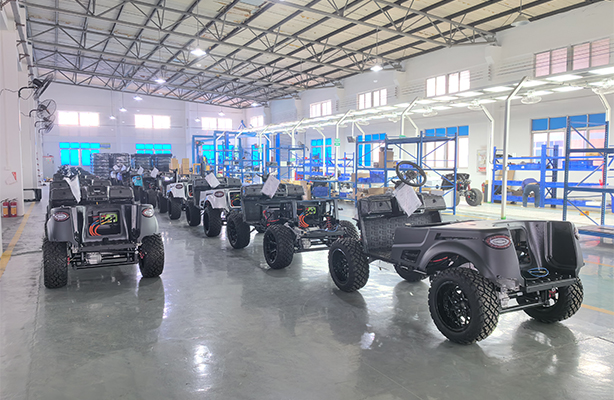
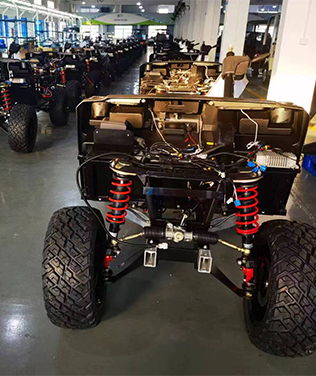
Standing on the mountain peak, we can see the farther world. Due to unique style, excellent quality, and perfect service, we have been approved by clients and markets to the maximum extent.
Our golf cart solenoids and industrial fleet components are trusted by factory operators across the globe. We maintain strong partnerships with customers who share our commitment to quality and innovation — co-developing new products to meet evolving industrial requirements.
We are able to meet various demands of different customers by adopting varied configurations of specification and performance grade. Following the basic concept of "Quality first, Customer first."
 One-stop service
High quality products
Advanced production equipment
OEM & ODM services
 "We not only provide our customers good before-sale service but also good after-sale service."
 "Even we can arrange engineer to solve the problems for customers."
A practical framework for fleet managers and industrial procurement teams.
Before sourcing replacement or upgrade solenoids, document the system voltage (36V, 48V, 72V), motor type (series wound, separately excited, AC induction), and current draw for each cart model in your fleet. This data forms the foundation of your solenoid specification requirements.
Factory operations vary significantly. A cleanroom pharmaceutical facility may have smooth, low-frequency cart movement, while an automotive assembly plant may subject carts to extreme start-stop cycling. Quantify your expected daily switching cycles per vehicle to select appropriately rated solenoids.
Assess temperature ranges, humidity levels, dust exposure, and chemical environment in your facility. These factors determine the required IP rating, contact material specification, and coil insulation class for your solenoids.
A solenoid that costs 30% more but lasts three times longer — while eliminating two unplanned maintenance events per year — delivers dramatically superior ROI. Calculate your cost per operating hour, not just cost per unit, when evaluating solenoid suppliers for large-scale procurement.
For large factory complexes operating mixed fleets of Club Car, E-Z-GO, and Yamaha vehicles, sourcing from a single supplier capable of providing OEM-compatible components across all platforms simplifies inventory management, reduces procurement complexity, and ensures consistent quality standards across your entire fleet.
The most successful industrial fleet operations treat solenoid procurement as a strategic supply chain decision — not a commodity purchase. Partnering with a manufacturer offering OEM/ODM flexibility, engineering consultation, and global supply chain reliability is the key differentiator for large factory complex operators.
Full-spectrum replacement parts engineered for factory complex fleet reliability — OEM compatible, industrial grade.
Heavy Duty Forward Reverse Switch Assembly — Industrial Fleet Compatible with Club Car Golf Cart
Club Car Golf Cart 48V Charger Plug Receptacle — Factory Charging Infrastructure OE#101828901
OEM Genuine Club Car MCOR 4 Throttle Potentiometer — Large Factory Fleet 105116301
Club Car Electric Golf Cart GE Motor Insulator Hardware Kit — Industrial OEM 1017947
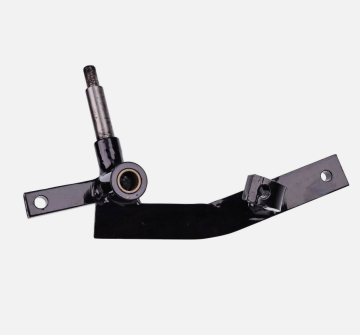 Golf Cart Spindle Assembly Passenger Side — Factory Complex Fleet 102354101 Club Car DS 2004-Up
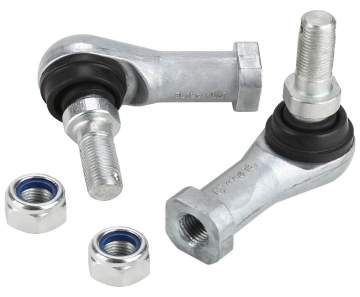 Ball Joint Kit Set (3) — Golf Cart Tie Rod End Set Left Right Thread for Industrial Fleet Club Car 102022601 102022602
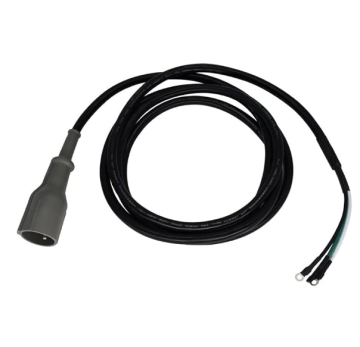 48V Charger Plug for Club Car Golf Cart — Factory Fleet Charging Wire Socket #101828901
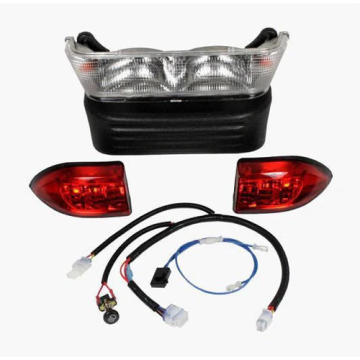 Club Car Precedent Golf Cart LED Light Kit (Headlight + Tail Light) — Industrial Factory Fleet Petrol & Electric (CC-001)