
 0086-13925528791
Leave Your Message
-
CONTACT XXCART
-
 CONTACT XXCART
-
 CONTACT XXCART
Engineered for the demanding environment of commercial airports — these lift kit components provide the ground clearance, structural strength, and ride stability that airport transit golf carts require for 24/7 operations.

Golf Cart Arm Rest Hip Restraint for EZGO TXT 1994-Up – Driver & Passenger Seat Handles, Replaces 71701-G01

Golf Cart A-Plate Strap Connection for Club Car DS – OEM# 1017266
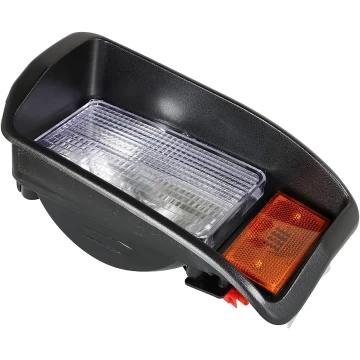
101988001 Factory Style Left Headlight - Driver Side Replacement for Club Car DS Golf Cart

Golf Cart Passenger Side Spindle Assembly for Club Car DS 2004 & Up (Gas & Electric) OEM #102354101
As global air passenger traffic surpasses pre-pandemic peaks — projected to exceed 4.7 billion passengers annually by 2026 — airports worldwide are investing heavily in ground-level transit infrastructure. Golf carts equipped with high-performance lift kits have emerged as the operational backbone of intra-terminal mobility, bridging the gap between passenger comfort and operational efficiency.
Major international hubs — including LAX, Heathrow, Dubai, and Singapore Changi — operate hundreds of golf carts daily for passenger assistance, crew transfers, and inter-gate mobility. Lift kits that provide 3–6 inches of additional ground clearance are now standard for carts navigating elevated jet bridges, cargo ramps, and outdoor tarmac zones.
The global golf cart market was valued at over USD 2.1 billion in 2023 and is forecast to grow at a CAGR of 6.8% through 2030, driven largely by commercial and industrial applications. Airport lift kit retrofitting represents a rapidly expanding segment, with procurement cycles tied to fleet modernization programs at airports handling 10M+ annual passengers.
The shift toward electric airport fleets — mandated by carbon-neutral commitments from IATA and national aviation authorities — has created new demands for lift kit engineering. Electric golf carts require precisely calibrated suspension lift systems that account for battery weight distribution, ensuring stability and safe cornering under full passenger load.
Standard golf cart suspensions are engineered for flat fairways — not the demanding terrain of international airports. Tarmac seams, drainage grates, jet bridge transitions, and outdoor all-weather surface variations demand lift systems with increased ground clearance, reinforced spindles, heavy-duty A-arm assemblies, and precision-aligned steering geometry. The right lift kit is not an upgrade — it is an operational necessity.
Request Airport Fleet Consultation ›From landside passenger terminals to airside operations, lift-equipped golf carts serve diverse and mission-critical roles within the modern airport ecosystem. Each deployment zone presents unique clearance, load, and maneuverability requirements that make engineered lift kits indispensable.
Airports are legally required under ADA and international disability access regulations to provide assisted transit for passengers with reduced mobility (PRMs). Lift-kit-equipped golf carts navigate thresholds, curb cuts, and varied floor surfaces throughout departure halls, connecting gates, and baggage claim areas, ensuring smooth and compliant passenger transfer.
Ground handling crews, fueling supervisors, and aircraft turnaround coordinators rely on lifted carts for rapid movement across the ramp. The elevated suspension absorbs vibration from uneven apron surfaces and allows safe crossing over drainage channels, hose bridges, and aircraft tie-down points — environments impossible to navigate safely without proper lift systems.
Air freight facilities require robust ground transport for manifest verification, security escorts, and inter-zone logistics coordination. Heavy-duty lift kits allow carts to traverse dock levelers, warehouse ramps, and outdoor cargo aprons while maintaining load stability — a critical performance parameter in facilities handling time-sensitive or high-value freight.
Aircraft maintenance organizations (AMOs) use golf carts extensively within hangars for tool transport, inspection crew mobility, and parts delivery. Lift kits provide the required clearance for maneuvering over hangar rail systems, floor drains, and threshold plates, while reinforced steering components ensure precision handling in confined spaces.
Security personnel and law enforcement units deploy lift-equipped golf carts for perimeter patrol, checkpoint monitoring, and rapid response within landside and airside zones. The enhanced ground clearance allows patrol vehicles to access service roads, grass shoulders, and outdoor patrol routes that standard-height carts cannot safely navigate.
Integrated airport city developments — combining terminals, hotels, convention centers, and transit stations — rely on golf cart fleets to move guests and staff across mixed-surface pathways. Lift kits engineered for multi-surface performance bridge the operational gap between indoor polished floors and outdoor paved connectors.
The airport transit lift kit segment is evolving rapidly, driven by electrification mandates, smart airport initiatives, and intensifying passenger experience standards. Understanding these trends is essential for procurement managers, fleet operators, and MRO suppliers planning capital investment in ground transit infrastructure.
| Trend | Impact on Lift Kit Design | Timeline |
|---|---|---|
| 🔋 Full Electric Fleet Mandates | Lift kits must accommodate heavier battery packs with recalibrated spring rates and reinforced A-arm geometry to maintain level ride height under increased static load. | 2024–2027 |
| 🤖 Semi-Autonomous Airport Carts | Autonomous navigation systems require precise, repeatable suspension travel; lift kits with coilover shocks and adjustable preload are becoming standard for sensor-equipped platforms. | 2025–2028 |
| 🌍 Carbon-Neutral Airport Certification | Airports achieving Airports Council International Level 4+ accreditation prioritize lightweight alloy lift kit components to maximize electric range and reduce overall fleet emissions footprint. | 2025–2030 |
| 📱 Fleet Telematics Integration | Smart suspension sensors embedded within lift kit assemblies allow real-time ride height monitoring, maintenance prediction, and remote fleet diagnostics via airport operations centers. | 2026–2030 |
| ♿ Universal Design Standards | Revised ICAO and national PRM regulations will require minimum ground clearance specifications for passenger-facing carts, making compliant lift kits a regulatory prerequisite rather than an optional upgrade. | Ongoing |
Choosing a lift kit for airport transit application requires evaluation criteria that extend well beyond recreational or golf course specifications. Below are the key technical and operational parameters airport procurement teams and fleet managers should prioritize.
For standard terminal corridors, a 3-inch lift is typically sufficient. Outdoor tarmac and ramp operations require 4–6 inch lifts. Ensure the selected kit maintains OEM steering geometry angles to prevent premature tire wear and maintain directional stability at operational speeds.
Airport-grade lift kits should feature heat-treated steel or aerospace-grade aluminum A-arms, corrosion-resistant hardware, and powder-coated finishes rated for outdoor UV and chemical exposure from de-icing fluids and jet fuel residue common on apron surfaces.
Leading airport fleets standardize on EZGO, Club Car, or Yamaha platforms. Verify that lift kits provide precise OEM-equivalent fitment for spindle assemblies, ball joints, tie rod ends, and brake cable routing — critical for maintaining warranty compliance and reducing maintenance downtime.
Passenger-carrying carts in airports must sustain repeated high-frequency loading cycles with multiple adults plus luggage. Specify lift kits with load-rated spindles and spring assemblies that exceed the standard OEM payload rating by a minimum 25% safety margin.
Airport MRO schedules demand rapid component exchange. Prioritize lift kit systems with globally stocked replacement parts — including king pins, wave washers, steering joints, and accelerator potentiometers — to minimize cart downtime during peak operational periods.
All lift kit assemblies deployed in commercial airport environments should carry CE certification, comply with ISO 3691 powered industrial truck standards, and be validated against the specific ICAO Annex 14 requirements applicable to airside vehicle operations at international airports.

XXCART is a large and powerful manufacturer of electric golf carts which has obtained CE certification. We primarily design and produce high-end customized golf carts by integrating the engineering advantages of EZGO, Club Car, and Yamaha platforms — paired with advanced proprietary technology developed in-house and validated to international electric vehicle standards.
Our lift kit components and suspension assemblies are engineered for the full spectrum of commercial applications — with particular expertise in supplying airports, logistics hubs, resort complexes, and industrial campus operators who demand zero-compromise performance, parts traceability, and global aftermarket support.
XXCART's cover panels are manufactured from special PP automobile engineering material, delivering fashion-forward aesthetics with outstanding impact resistance and UV stability — critical for outdoor airport environments. Each cart is equipped with a unique individual operation system, agile and smooth steering system, and an independent suspension system designed for consistent performance under commercial duty cycles.
For airport operators requiring branded cart liveries, custom lift heights, integrated accessibility ramps, or specialized cargo configurations, our OEM/ODM program provides full engineering support from concept through certification — enabling a truly turnkey fleet solution.
Get OEM/ODM Quote ›
XXCART adheres to a quality-first philosophy and is committed to providing airport transit operators with high-quality, safe, and environment-friendly high-performance lift kit systems and complete golf cart platforms — validated through rigorous in-house and third-party testing protocols.
We adhere to technology-driven advantage creation, continuously promoting industrial progress through component innovation — from heat-treated A-arm assemblies to corrosion-resistant spindle kits engineered for sustained performance in the chemically demanding airport ground environment.
Following a service-first principle, XXCART strives to meet the continuously evolving expectations of airport fleet procurement teams — providing tailored lift kit specifications, OEM integration support, and documented performance data to satisfy the due diligence requirements of commercial operators worldwide.
Maintain peak performance of your airport transit golf cart fleet with precision-manufactured replacement components — engineered to OEM specifications and globally stocked for rapid deployment to any airport operation worldwide.

Club Car Precedent Golf Cart Inner Steering Ball Joint – OEM#102565701 / 103826301 | High-Quality Replacement for Smooth Steering

Front Right Passenger Side (1010347) & Driver Side (1010348) Spindle for Club Car DS Golf Cart 1981–2003

Club Car Precedent & DS Electric Golf Cart Tie Rod End – Steering Rack Joint (OEM#102022602)

MCOR Accelerator Potentiometer for Club Car Precedent Golf Carts (2004–2011) – Replacement for Motor Controller 102528501
Golf Cart Arm Rest Hip Restraint for EZGO TXT 1994-Up – Driver & Passenger Seat Handles, Replaces 71701-G01
Golf Cart A-Plate Strap Connection for Club Car DS – OEM# 1017266
101988001 Factory Style Left Headlight – Driver Side Replacement for Club Car DS Golf Cart
Golf Cart Passenger Side Spindle Assembly for Club Car DS 2004 & Up (Gas & Electric) OEM #102354101
Whether you operate a regional airport or a global hub, XXCART's golf cart lift kit systems and precision replacement components are engineered to meet your operational demands. Contact our commercial fleet specialists for a customized consultation, volume pricing, and technical specification support.
Contact XXCART Fleet Team ›