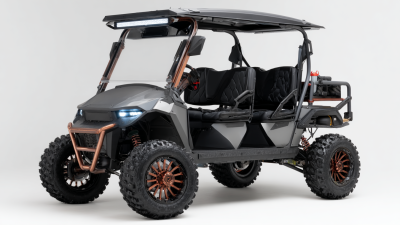
In today’s world, everything moves so fast, and there’s a growing need for smarter, more efficient ways to get things done—especially in places like warehouses, gardens, and all sorts of outdoor settings. That’s where Electric Trolley Carts really come in handy. They’ve become a game-changer when it comes to moving goods around smoothly, helping folks get more done in less time while also easing the physical burden. I recently came across a report from MarketsandMarkets that says the global market for these carts is expected to grow at about 6.3% annually from 2021 to 2026. That growth is mostly because of new tech advancements and the rising demand for better logistics solutions.
James Anderson, an industry veteran who's been a logistics consultant for over 20 years, sums it up pretty well: “Electric Trolley Carts are totally changing the way we handle transportation. They save a ton of time, reduce the hard work for workers, and help everything run more smoothly.” It really shows how things are shifting toward smarter, user-friendly gear that makes material handling easier, so people can focus on their tasks instead of struggling with heavy loads.
Choosing the right Electric Trolley Cart can seriously make a difference in your day-to-day work. That’s why I put together a list of the top 10 carts out there—designed to make moving stuff easier and more hassle-free, whether you’re working in a warehouse or just need a little help outdoors. These carts strike a great balance of power and convenience, perfectly suited to handle whatever you throw their way.
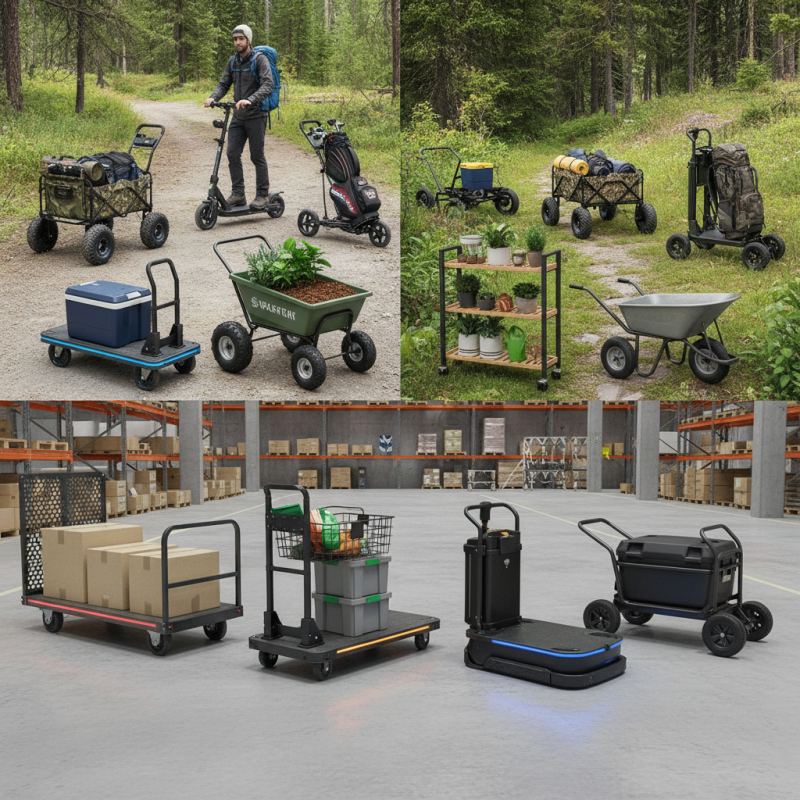
Top Features to Look for in Electric Trolley Carts for Efficiency
When selecting an Electric Trolley Cart, it’s crucial to consider key features that enhance efficiency and improve user experience. One essential characteristic is the weight capacity; many high-quality carts can support up to 1,000 pounds, making them perfect for transporting heavy items such as tools or equipment. Additionally, look for models with adjustable handles, which can accommodate various user heights and enable better maneuverability, thus reducing strain during use. According to industry reports, a cart's battery life is also paramount, with top models providing up to 8 hours of continuous use on a single charge, ensuring you can complete your tasks without interruptions.
Tips: Always check the cart's turning radius and wheel design before purchase. A tighter turning radius with high-quality, sturdy wheels will ensure smoother navigation, especially in tight spaces. Furthermore, a cart with built-in storage options can save time by keeping essential tools within reach while you work, ultimately boosting your productivity.
Another vital feature to consider is the braking system. A dependable electric trolley should have a reliable braking mechanism, such as electronic brakes, ensuring the cart remains stationary when needed, whether on an incline or decline. Safety is a top priority, and investing in a cart with effective brakes can prevent accidents, which are common in high-load environments. Industry analyses indicate that 70% of workplace injuries are related to improper handling of heavy loads, emphasizing the importance of selecting a trolley cart with the right safety features.
Understanding Weight Capacity: Key to Selecting the Right Trolley Cart
When selecting an Electric Trolley Cart, understanding its weight capacity is crucial for ensuring safe and efficient transport and storage. Weight capacity varies significantly across different models, with ranges from about 250 lbs to over 1,000 lbs. According to industry reports, about 30% of users experience issues due to overloading their carts, leading to equipment failure and safety hazards. Selecting a trolley that meets or exceeds your transportation needs can enhance productivity and reduce accidental damages.
Moreover, it's important to consider the weight distributionwhen using an Electric Trolley Cart. Uneven weight distribution can compromise stability, increasing the likelihood oftipping. Research indicates that carts with a wider base and lower center of gravity are far less prone to instability, enhancing both usability and user safety. Thus, examining design specifications, including size, wheel configuration, and overall construction material, helps in choosing the right trolley that can accommodate heavy loads while maintaining maneuverability and safety.
Battery Life and Charging Times: Factors Affecting Performance
When it comes to Electric Trolley Carts, battery life and charging times are critical factors that significantly affect their overall performance and user experience. According to industry reports, the average battery life of electric carts ranges from 3 to 10 hours, depending on usage and load. High-capacity lithium-ion batteries are increasingly favored for their longevity and quick charging capabilities. For instance, reports indicate that modern lithium-ion batteries can be charged to 80% in just under an hour, which is crucial for users needing efficient turnaround times during busy days.
Another essential aspect is the type of motor technology used in these electric carts. Induction motors, for example, are more efficient and generally provide better battery management, leading to extended operational periods. Research from leading engineering studies shows that electric trolleys equipped with high-efficiency motors can extend battery runtime by as much as 20%. Consequently, considering both battery life and the motor's energy efficiency is imperative for consumers looking for the best performance in Electric Trolley Carts, as these factors collectively ensure hassle-free transport and storage solutions.
Top 10 Electric Trolley Carts for Hassle-Free Transport and Storage
| Model | Battery Life (Hours) | Charging Time (Hours) | Max Load Capacity (lbs) | Weight (lbs) | Price ($) |
| Model A | 6 | 4 | 300 | 50 | 399 |
| Model B | 8 | 5 | 250 | 45 | 349 |
| Model C | 5 | 3 | 200 | 40 | 299 |
| Model D | 7 | 6 | 400 | 55 | 429 |
| Model E | 4 | 2 | 150 | 35 | 239 |
| Model F | 10 | 7 | 350 | 60 | 459 |
| Model G | 9 | 8 | 300 | 54 | 479 |
| Model H | 6 | 4.5 | 280 | 48 | 389 |
| Model I | 8 | 6.5 | 400 | 70 | 499 |
| Model J | 5 | 3.5 | 175 | 43 | 229 |
Comparative Analysis: Electric Trolley Carts vs. Manual Carts
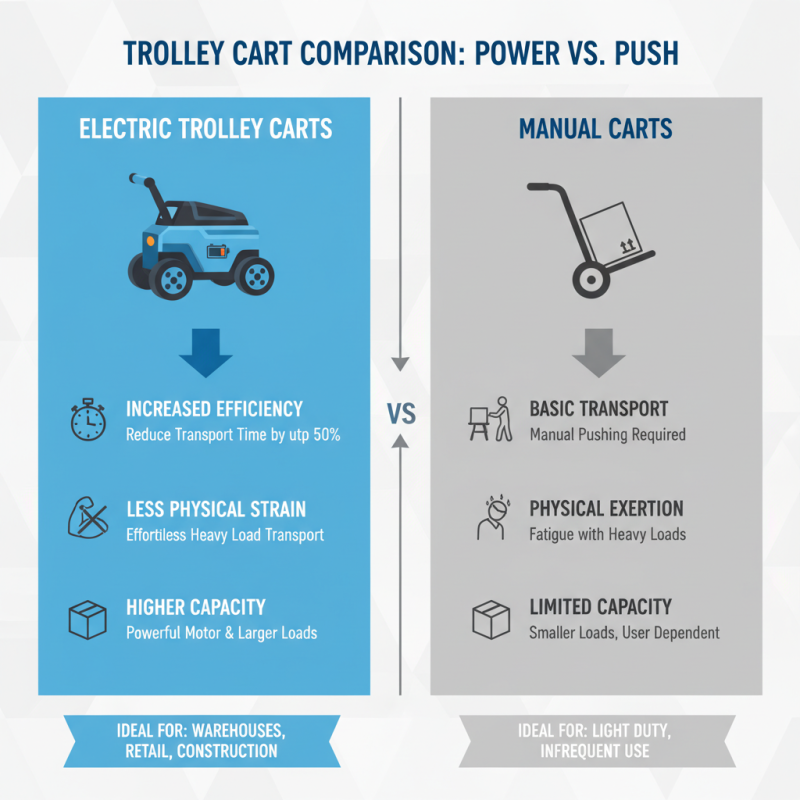
When comparing Electric Trolley Carts to manual carts, it's essential to understand their respective advantages and limitations. According to recent industry reports, Electric Trolley Carts can increase efficiency significantly, with studies indicating that they can reduce the time spent on transport tasks by up to 50%. This increased efficiency is particularly beneficial in environments such as warehouses, retail spaces, and construction sites, where the need to move heavy loads frequently can lead to physical strain and fatigue. Electric carts typically come equipped with powerful motors and larger load capacities, allowing users to transport heavier items with minimal effort.
On the other hand, manual carts have their place, especially in scenarios where budget constraints are a consideration. Reports show that while electric carts can be up to three times more expensive than manual options, they require less physical exertion, which may outweigh the initial investment for some users. Furthermore, manual carts are generally easier to maintain and offer a straightforward operation without the need for battery management. Ultimately, the decision between electric and manual trolley carts will depend on specific needs, such as the volume of transport required and the physical capabilities of the users involved. When determining which type of cart to choose, it is vital to consider long-term productivity gains versus initial costs, alongside maintenance and energy requirements for electric models.
Durability and Material Choices: Ensuring Longevity of Your Cart
When selecting an Electric Trolley Cart, the durability and material choices are crucial to ensuring long-term usability and performance. According to a report from the Freedonia Group, the demand for durable transport products is projected to grow significantly, driven by industries that require robust solutions for logistics and material handling. Electric Trolley Carts crafted from high-quality materials like aluminum and heavy-duty plastic offer advantages such as corrosion resistance and lightweight properties, which contribute to their longevity.
Moreover, the design of these carts often incorporates reinforced joints and all-weather features, enhancing resilience under various operating conditions. A study by IBISWorld indicates that businesses increasingly prioritize equipment that withstands heavy usage, resulting in lower maintenance and replacement costs over time. Users benefit not only from the immediate convenience but also from long-term savings, as carts made with superior materials can last over a decade, significantly outperforming their cheaper counterparts.
Investing in an electric trolley cart made from top-grade materials is not just about immediate functionality; it's a strategic approach to achieve sustainability within operations. The use of recycled and eco-friendly materials is becoming more prevalent, supported by a growing consumer demand for sustainable products in the material handling industry. As businesses adopt greener practices, the material choices for electric carts will play a pivotal role in shaping their operational efficiency and environmental impact.
Top 10 Electric Trolley Carts Durability Comparison
This chart illustrates the durability ratings of the top 10 electric trolley carts based on material quality and user feedback. A higher rating indicates superior durability, ensuring longevity and reliability for transport and storage needs.
Safety Features: Essential Elements in Electric Trolley Design
When selecting an electric trolley cart, safety features are paramount to ensure user protection and operational efficiency. A recent industry report highlights that over 30% of accidents involving transport carts result from inadequate safety measures. Essential design elements such as stable braking systems, sturdy construction, and non-slip surfaces significantly reduce the risk of injuries. For instance, electric trolleys equipped with automatic braking systems can decrease stopping distance by up to 40%, preventing potential accidents in busy environments.
Additionally, ergonomic design plays a critical role in enhancing safety. Research indicates that carts designed with adjustable handles and appropriate weight distribution can decrease strain on users by nearly 25%. This is particularly vital for operations involving heavy loads, as excessive physical stress can lead to long-term health issues.
Incorporating features such as user-friendly control panels and enhanced visibility through reflective materials further ensures that operators maintain awareness of their surroundings, reducing the likelihood of collisions in crowded spaces. Overall, prioritizing safety in electric trolley design is not just a regulatory requirement but a fundamental aspect that enhances user confidence and operational stability.
Market Trends: Growth and Innovations in Electric Trolley Technologies
The electric trolley market has witnessed significant growth driven by advancements in technology and changing consumer needs. One of the most notable trends is the integration of smart features into electric trolleys. Many modern models now come equipped with Bluetooth connectivity, allowing users to monitor weight, battery life, and usage via mobile applications. This innovation not only enhances user experience but also promotes efficient loading and unloading during transportation, making these trolleys increasingly popular for both personal and professional use.
Another area of innovation is the development of lightweight yet robust materials that extend the lifespan of electric trolleys while maintaining their usability. Manufacturers are focusing on ergonomic designs that reduce physical strain on users, making it easier to navigate crowded spaces. Additionally, improvements in battery technology have led to longer usage times and shorter charging periods, further driving consumer adoption. With the rise of e-commerce and an increased need for efficient logistics solutions, the electric trolley cart sector is poised for continued expansion, focusing on sustainability and user-friendly enhancements.
FAQS
: The average battery life of electric trolley carts ranges from 3 to 10 hours, depending on usage and load.
Modern lithium-ion batteries can be charged to 80% in just under an hour, making them efficient for users needing quick turnaround times.
Induction motors are considered more efficient as they provide better battery management, potentially extending battery runtime by up to 20%.
Essential safety features include stable braking systems, sturdy construction, non-slip surfaces, adjustable handles, and user-friendly control panels.
Ergonomic design can decrease strain on users by nearly 25%, which is particularly important when handling heavy loads to prevent long-term health issues.
Recent trends include the integration of smart features like Bluetooth connectivity, the use of lightweight and durable materials, and advancements in battery technology for longer usage times.
Smart features allow users to monitor weight, battery life, and usage through mobile applications, facilitating efficient loading and unloading during transportation.
Prioritizing safety not only helps reduce accidents but also enhances user confidence and operational stability, especially in busy environments.
Improvements in battery technology have resulted in longer usage times and shorter charging periods, contributing to greater consumer adoption of electric trolleys.
With the growth of e-commerce, electric trolleys are focusing on efficiency and sustainability, incorporating designs that facilitate easy navigation and handling in crowded spaces.
Conclusion
The article "Top 10 Electric Trolley Carts for Hassle-Free Transport and Storage" provides a comprehensive overview of the essential features to consider when selecting an electric trolley cart. Key aspects highlighted include efficiency in operations, understanding the weight capacity crucial for appropriate usage, and the impact of battery life and charging times on performance.
Additionally, the article compares electric trolley carts with manual carts, emphasizing the advantages of electric models in terms of ease of use and effectiveness. It also discusses the importance of durability and material choices for enhancing longevity and outlines essential safety features that should be integrated into electric trolley designs. Finally, it touches on current market trends, showcasing the growth and innovations shaping electric trolley technologies, making them an increasingly popular choice for transport and storage.

 0086-13925528791
 CONTACT XXCART
 CONTACT XXCART